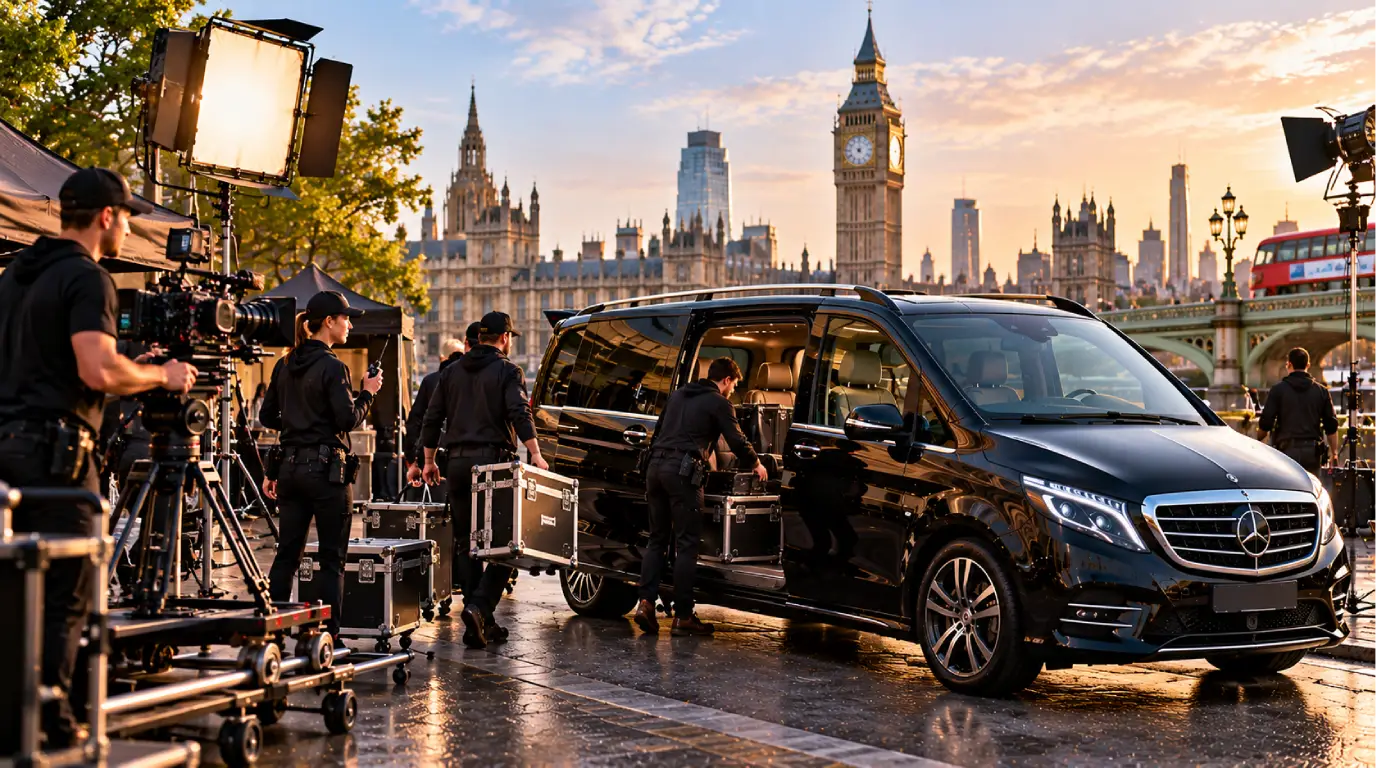
A film shoot lives and dies by its schedule. Every hour lost to a late vehicle, a missed turning or a car stuck in traffic is an hour of crew, equipment and talent time that the budget has already paid for. When a production moves between several London locations in a single day, transport stops being a background detail and becomes part of the plan itself.
At London Transfers, we supply vehicles and chauffeurs to photo, film, TV and music video productions across the UK. This guide explains how to plan transport for a multi-location London shoot, so your team spends its time filming rather than waiting.
Why London Shoots Are Harder to Move Around?
London is a brilliant place to film, but it is not an easy city to move through. Roads are congested, parking is limited and many iconic locations have tight access rules. A route that takes 20 minutes at 6am can take an hour by mid-morning, and a unit base that works on paper may turn out to be a street with no space for a van.
Planning ahead for these realities is the difference between a day that runs to the call sheet and one that runs behind from the first move.
Step 1: Start with the Call Sheet and Location List
Before you book anything, gather the basics from your production team:
- Every location and its address, access point and nearest parking
- The shooting order and approximate times at each location
- Crew, cast and extra numbers at each stage of the day
- Equipment and wardrobe that needs to move between locations
- Any restricted access times or local permission requirements
Share this with your chauffeur company early. The more your transport provider knows about the real schedule, the better they can plan routes, timings and vehicle numbers around it.
Step 2: Decide What Needs to Move and Who Moves It
Productions usually have three transport needs, and each one calls for a different solution:
- Talent and key people: actors, directors, producers and clients who need comfortable, reliable and discreet travel.
- Crew: larger groups who need to get between locations together and on time.
- Equipment and props: items that need their own vehicles and loading space.
Mixing these up is a common mistake. Putting talent in a crowded crew vehicle, or squeezing equipment into passenger cars, wastes time at every move.
Step 3: Choose the Right Vehicles for Talent
Talent travel is about reliability, privacy and arriving ready to perform. A chauffeur-driven executive vehicle gives actors and presenters somewhere quiet to prepare, rehearse lines or rest between scenes. Our Range Rover Executive is a popular choice, and for productions that want something with more presence, the Mercedes G-Wagon offers a strong look for both transport and on-screen use.
Our film unit cars and production vehicles are available for photo, film, TV and music video productions, so you can find the right vehicle whether it is a background car, a hero vehicle or simply the way the director gets between locations.
Step 4: Plan Crew Moves Between Locations
Moving a crew between locations is where many productions lose the most time. Dozens of people travelling in private cars, taxis or public transport arrive at different times, and the day starts late.
Group transport solves this. Minibuses suit smaller crews, while larger units are best moved together by coach. Our coach hire carries 22 to 72 passengers with space for luggage and equipment, which makes it a practical way to move an entire unit in one go. With a single pick-up point and one departure time, everyone arrives together.
Step 5: Keep a Vehicle on Standby All Day
Shoots rarely run exactly to plan. A scene overruns, the weather changes or a location becomes unavailable, and suddenly the next move needs to happen earlier or later than expected. Fixed-time transfers cannot always cope with this kind of change.
That is where hourly hire helps. Our as directed chauffeur service keeps a vehicle and chauffeur with you throughout the day, ready to move when you are. Our Range Rover is available from £75 per hour, with other vehicles quoted according to the schedule.
Step 6: Account for Parking and Unit Bases
Parking is one of the biggest headaches for London productions. Before the day, confirm where vehicles will wait, where crew will be dropped off and where equipment will be unloaded. Many locations need advance permission for parking and filming, so speak to your location manager early and share the details with your chauffeur company.
A chauffeur who knows the local area can often suggest nearby waiting points, drop-off routes and alternatives if a planned spot is blocked.
Step 7: Think About Music Video and Event Shoots
Music video and event productions come with extra demands, such as late finishes, performers arriving at different times and sometimes large entourages. If your shoot involves a festival, venue or live performance, take a look at our music events chauffeur service, which covers the transport side of live and music-related work.
Step 8: Build Time Into Every Move
Never plan a move with the exact minimum travel time. Add a buffer for traffic, loading and parking, particularly if the next location has a strict start time. A common rule on productions is to treat the estimated journey as a minimum, then add an allowance for the unexpected.
If a shoot involves early starts or late wraps, tell your chauffeur company in advance. Unsociable hours need to be planned for properly, not added at the last minute.
Step 9: Agree a Single Point of Contact
On a busy day, the last thing a production needs is confusion about who to call. Agree one contact on your side, such as the transport coordinator or unit manager, and one contact at the chauffeur company. Changes then travel quickly, and nobody is left guessing.
A Simple Checklist for Multi-Location Shoot Transport
- Confirm all locations, access points and timings.
- Separate talent, crew and equipment transport needs.
- Choose vehicles that suit each group and their luggage.
- Plan parking, waiting points and drop-off areas in advance.
- Keep a vehicle on standby for changes to the schedule.
- Add a traffic buffer to every move.
- Agree a single point of contact for the day.
Why Choose London Transfers for Your Production?
Every London Transfers booking comes with a licensed, professionally trained chauffeur, a well-maintained vehicle and clear pricing agreed before you travel. We work with production teams to find the right vehicles for each stage of the day, and we are happy to build a plan around your call sheet. To discuss your shoot, contact our team with your dates, locations and crew numbers.
Frequently Asked Questions
What types of vehicles do you provide for film and TV productions?
We provide a wide range of location vehicles for photo, film, TV and music video productions across the UK, alongside chauffeur-driven cars, minibuses and coaches for moving cast and crew.
Can you move a whole crew between locations?
Yes. Our minibuses and coaches carry groups from six to 72 passengers, so a full unit can travel together between locations with their luggage.
Can a vehicle stay with us all day?
Yes. Our as directed hire keeps a chauffeur and vehicle available for half or full days, which suits shoots where timings can change.
How far ahead should we book transport for a shoot?
As soon as your dates and locations are confirmed. For larger productions or busy periods, we recommend booking several weeks ahead so the right vehicles are available.
Is pricing fixed?
Point-to-point journeys are quoted at a fixed price. Hourly hire starts from £75 per hour for the Range Rover, and group vehicles such as minibuses and coaches are quoted individually.
Can you help with early starts and late wraps?
Yes. Please tell us your start and finish times when you book, so we can plan chauffeurs and vehicles around your schedule.
Do I need to arrange parking permissions myself?
Parking and filming permissions are usually handled by the production or location manager. We can advise on practical waiting points and drop-off routes once we know your locations.